
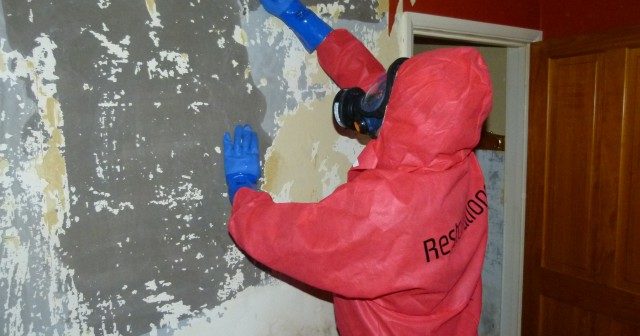


Awaab’s Law and Mould Remediation: A 2026 Guide for Social Landlords
This article provides general information and is not legal advice. Landlords should consult the legislation, current government guidance and their legal advisers when determining their obligations in a particular case.
Awaab’s Law has changed how social landlords in England must respond to dangerous damp and mould. Since 27 October 2025, significant damp and mould hazards have been subject to legally enforceable investigation, communication and safety deadlines.[1][2]
For housing associations, councils and other registered providers of social housing, the legal clock may begin as soon as the landlord becomes aware of a potential hazard. A report of mould should therefore be triaged immediately. Waiting to see whether it worsens can reduce the time available to inspect the home, make it safe and arrange lasting remedial work.
If damp or mould could present a risk to an occupant, contact Restorations UK’s mould-remediation and testing team straight away. Early specialist involvement can help identify the moisture source, establish the scale of contamination and move the case towards a safe, documented outcome within the available timeframe.
This guide explains the current requirements and how investigation, moisture control, professional mould remediation and verification can help landlords protect residents and maintain clear records of the work undertaken.
What is Awaab’s Law?
Awaab’s Law is named in memory of two-year-old Awaab Ishak, who died in 2020 following prolonged exposure to mould in his family’s social home in Rochdale. His family had repeatedly raised concerns about the conditions in the property.
The law was introduced through the Social Housing (Regulation) Act 2023. Its detailed requirements are set out in the Hazards in Social Housing (Prescribed Requirements) (England) Regulations 2025.[2]
The requirements form part of social housing tenancy agreements. This means a tenant may take legal action for breach of contract if their social landlord fails to comply.
Who does Awaab’s Law currently apply to?
Awaab’s Law currently applies to social housing in England, including homes let by councils and registered housing providers under relevant tenancy agreements.
The Renters’ Rights Act 2025 created powers to extend Awaab’s Law to privately rented homes.[3] However, as of August 2026, the government has not yet brought the detailed Awaab’s Law requirements and response times for the private rented sector into force. Private landlords remain subject to their existing repair, fitness and housing-safety duties.
What are the Awaab’s Law deadlines for damp and mould?
The response depends on whether the reported conditions may amount to a significant hazard or an emergency hazard.[1][2]
| Required action | Significant damp or mould hazard | Emergency hazard |
|---|---|---|
| Investigate | Within 10 working days | As soon as reasonably practicable and within 24 hours |
| Provide written summary | Within 3 working days after the investigation concludes | Where required, within 3 working days after the investigation concludes |
| Complete relevant safety work | Within 5 working days after the investigation concludes | As soon as reasonably practicable and within 24 hours |
| Further preventative work | Begin within 5 working days where reasonably practicable; otherwise take steps to arrange it within 12 weeks | Applicable further work must still be arranged and completed within the Regulations |
Mould can become a 24-hour legal emergency.
Under The UK’s 2025 Awaab’s Law, social landlords must act fast.
Significant damp and mould hazards
Where the landlord has reasonable grounds to suspect a significant damp or mould hazard, it must:
- investigate the potential hazard within 10 working days of becoming aware of it;
- produce a written summary of the investigation and provide it to the tenant within three working days after the investigation concludes;
- complete relevant safety work within five working days after the investigation concludes;
- begin any further preventative work within five working days where this is reasonably practicable; and
- where it is not reasonably practicable to begin that further work within five working days, begin it as soon as reasonably practicable and, in any event, take steps to arrange for it to begin within 12 weeks.
The written summary should explain what was investigated, the findings, and what action the landlord intends to take.
Emergency hazards
An emergency hazard presents an imminent and significant risk of harm to an occupier’s health or safety. The landlord must investigate and carry out relevant safety work as soon as reasonably practicable and within 24 hours of becoming aware of it.
If the home cannot be made safe within the applicable deadline, the landlord must offer suitable alternative accommodation at its own expense until the property is safe to occupy.
These are maximum legal timeframes rather than targets. Where the circumstances require faster action, the landlord should act sooner.
A landlord does not have ten working days to decide whether to begin responding. Reports should be triaged when they arrive, with urgent specialist support arranged immediately where the available information indicates a possible significant or emergency hazard.
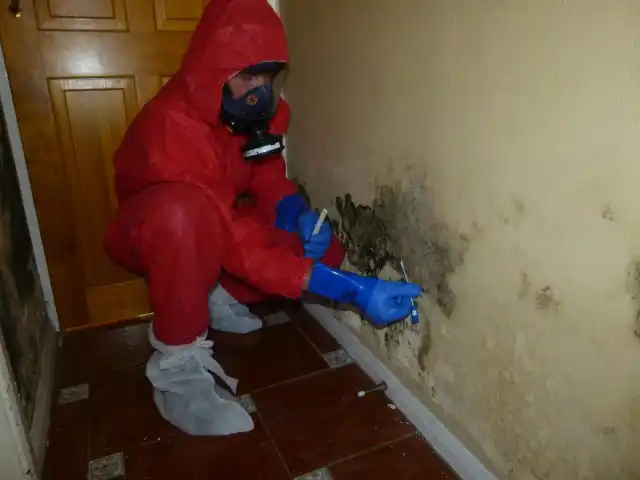
Why contact a mould-remediation specialist straight away?
Early contact does more than secure a place in a contractor’s diary. It gives the landlord more time to coordinate the different parts of a defensible response before the statutory deadlines expire.
“We believe it’s vital to deal with mould as soon as it appears. Specialist drying and mould remediation work go hand in hand, this means removing the contamination then addressing the moisture behind it to help prevent the problem from returning.”
Stuart Kerr
Founder & Director
Concerned about a live damp or mould report? Call Restorations UK today rather than waiting for the condition to spread or the response window to narrow.
Restorations UK can help landlords move promptly from a resident’s report to practical action by:
- attending quickly to inspect affected areas and advise on immediate priorities;
- helping identify leaks, water ingress, high moisture and other underlying causes;
- assessing visible and potentially concealed contamination;
- advising on containment, drying, removal and decontamination;
- carrying out professional mould air and surface testing where it adds useful evidence;
- documenting the work undertaken; and
- conducting post-remediation assessment to help establish whether mould levels have been effectively reduced.
Where the moisture source is unclear, Restorations UK can also provide specialist leak detection, building surveys and water-damage drying services.
When does damp or mould become a significant hazard?
There is no single patch size, mould colour or test score that automatically determines whether Awaab’s Law applies. The assessment is specific to the property and its occupants.
Landlords should consider factors including:
- the extent, location and recurrence of damp or mould;
- whether mould is visible or suspected in concealed areas;
- moisture levels, leaks, water ingress, ventilation and building defects;
- the condition of bedrooms and other heavily occupied rooms;
- how long residents are exposed to the conditions; and
- the age and health of the people living in the home.
Babies, children, older people, pregnant women, people with respiratory conditions and people with weakened immune systems may be particularly vulnerable. The absence of a formal medical diagnosis does not remove the need to investigate.
Government guidance is also clear that landlords should not dismiss reports by making assumptions about a resident’s “lifestyle”. Cooking, bathing and drying clothes are normal domestic activities. A competent investigation should identify the moisture source and assess the actual risk.1
Why removing visible mould may not solve the problem
Mould growth indicates the presence of excess moisture. This may result from a leak, water ingress, condensation, insufficient ventilation, thermal bridging, incomplete drying after water damage or a combination of factors.
Cleaning or painting over visible mould without addressing the moisture source can leave concealed contamination behind and allow growth to return. Disturbing mould without appropriate containment and filtration can also spread particles into previously unaffected areas.
An effective response may therefore involve:
- inspecting the property and assessing the risk to its occupants;
- identifying and controlling the underlying moisture source, using leak detection where required;
- measuring moisture and investigating potentially concealed mould;
- containing affected areas to reduce cross-contamination;
- removing or decontaminating affected materials using appropriate methods;
- using specialist structural drying to dry the affected building materials thoroughly; and
- verifying and documenting the condition after remediation.
The role of professional mould air and surface testing
Awaab’s Law does not require landlords to use a particular mould-testing product, and testing should not be used to delay urgent safety work. In the right circumstances, however, objective air and surface measurements can strengthen an investigation and provide useful evidence before and after remediation.
Restorations UK offers Mycometer® air testing and surface testing carried out by certified technicians. Mycometer describes its methods as rapid, standardised measurements of fungal biomass that can support investigation, remediation scoping and post-remediation verification.4
Mycometer’s methods measure fungal biomass rather than relying solely on a visual judgement. Results should always be interpreted alongside a competent property inspection, moisture investigation and the circumstances of the residents.
Testing should be commissioned early where it is likely to be useful. Leaving it until the end of the statutory investigation period can create avoidable delay, particularly where the results may affect the scope of containment or remediation.
To discuss Mycometer air testing, surface testing or post-remediation verification, contact Restorations UK or call 0800 0926 123.
Depending on the property and the purpose of the investigation, testing may help to:
1) Identify evidence of a mould source where growth is suspected but not readily visible;
2) Assess whether rooms away from the visible growth may be affected;
3) Support decisions about the extent of containment and remediation;
4) Establish documented pre-remediation conditions; and
5) Provide post-remediation verification following cleaning and decontamination.
Building an evidence-led response
Good record-keeping is an important part of complying with Awaab’s Law. A landlord’s file may need to show when it first became aware of the problem, how the report was triaged, who investigated it, what was found, how residents’ vulnerabilities were considered and when safety and preventative work was completed.
A useful case record can include:
- the tenant’s original report and subsequent communications;
- dated photographs and inspection notes;
- relevant information about the occupants and their vulnerability;
- moisture readings, testing results and the suspected cause;
- the written investigation summary;
- the scope of safety and remedial work;
- dates, contractor reports and completion evidence; and
- post-remediation assessment or verification where appropriate.
Testing is one part of this evidence. It does not replace the landlord’s duty to make a reasoned assessment or to act within the statutory deadlines.
How Restorations UK can support social landlords
Restorations UK has 35 years’ experience in restoring and decontaminating domestic and commercial properties. We support housing providers with rapid investigation and practical mould remediation across the UK.
Our mould services include:
- property inspection and remediation recommendations;
- Mycometer air and surface testing by certified technicians;
- moisture control and specialist structural drying;
- negative-air containment and HEPA filtration;
- mould cleaning and decontamination;
- measures to reduce cross-contamination; and
- post-remediation air and surface assessment with supporting documentation.
Where a damp or mould report may present an immediate or significant risk, early specialist involvement can help establish the condition of the property, define the necessary work and move the case towards a safe, properly documented outcome. It also reduces the risk of fragmented work in which inspection, leak detection, drying, decontamination and verification are arranged separately and too late.
Need help with mould investigation, testing or remediation?
If you own or manage social housing and need rapid support with damp and mould, Restorations UK can inspect the affected property, advise on immediate priorities and recommend an appropriate course of action.
Call us today to speak to a restoration specialist, or request a quote.
Sources and authoritative external references
- Ministry of Housing, Communities and Local Government: Awaab’s Law guidance for social landlords
- The Hazards in Social Housing (Prescribed Requirements) (England) Regulations 2025
- Ministry of Housing, Communities and Local Government: Guide to the Renters’ Rights Act
- Mycometer: mould air and surface testing technology
- Ministry of Housing, Communities and Local Government: Awaab’s Law guidance for tenants in social housing
Frequently asked questions
Yes. Since 27 October 2025, social landlords in England have been required to investigate and make safe significant damp and mould hazards within fixed legal timeframes. Emergency hazards must be investigated and made safe within 24 hours.
Where there are reasonable grounds to suspect a significant damp or mould hazard, the landlord must investigate within 10 working days. An emergency hazard must be investigated as soon as reasonably practicable and within 24 hours.
The law does not prescribe a particular mould test. Professional air or surface testing can nevertheless support an investigation, help define the extent of contamination and provide documented post-remediation verification where appropriate.
The Renters’ Rights Act 2025 provides for Awaab’s Law to be extended to private rented homes in England. As of August 2026, the detailed private-sector requirements and response times have not yet been brought into force.