



Need a Building Reinstatement Quote for an Insurance Claim?
If your home or commercial property has been damaged by a flood, escape of water, fire or another insured incident, Restorations (UK) can provide a detailed building reinstatement quote and carry out the repairs required to restore the property.
Our service can take your property from emergency mitigation, strip-out and structural drying through to plastering, electrical and plumbing works, kitchens, bathrooms, flooring and final redecoration. You receive one point of contact and one coordinated programme of insurance claim repairs from survey to handover.
If your insurer or loss adjuster has asked you to obtain a repair estimate, contact us with your claim number, photographs and any survey, drying or loss-adjuster reports already available. We can assess the damage and prepare a clear scope of reinstatement works for consideration by your insurer.
- Building reinstatement quotes for insurance claims
- Flood, fire and escape-of-water repairs
- Residential and commercial properties
- Detailed repair scope and supporting evidence
- Liaison with insurers and loss adjusters where instructed
- Emergency mitigation and structural drying
- Multi-trade repairs managed from start to finish
- Over 35 years of restoration experience
- Full UK coverage
What Is Building Reinstatement?
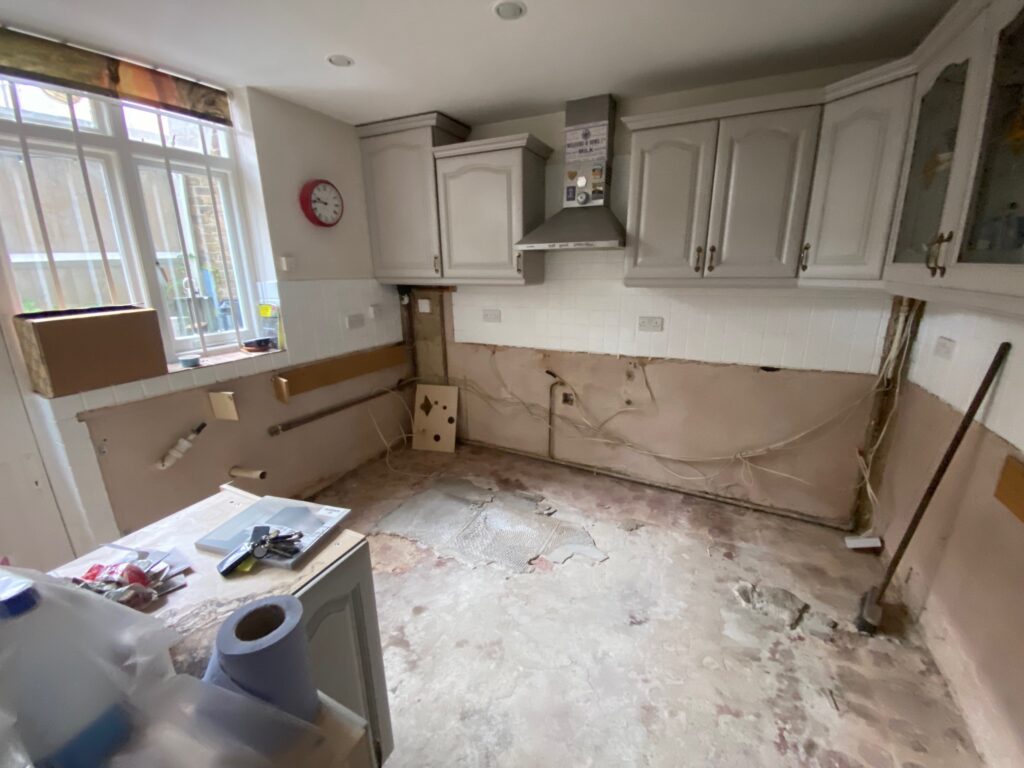
Building reinstatement is the repair and rebuilding stage that returns a damaged property to its pre-loss condition. It normally begins once the cause of the damage has been dealt with, contaminated or unsalvageable materials have been removed, and the building has been professionally dried where required.
It is more extensive than making the property safe or drying it out. Reinstatement can involve rebuilding walls and ceilings, replacing kitchens and bathrooms, repairing services, fitting new floors and completing all decorative finishes needed to make the building usable again.
For an insured repair, the agreed scope will usually aim to put the property back into substantially the condition it was in immediately before the insured damage occurred, subject to the policy terms, excess and limits.
What to Do Before Asking for an Insurance Repair Quote
The first hours after property damage can affect both the condition of the building and the evidence available for your claim.
1. Make the Property Safe
Do not enter a building affected by flood water, fire, sewage, structural movement or damaged electrical systems until it is safe. Stop the water supply or source of damage only if you can do so safely.
2. Notify Your Insurer
Report the incident as soon as possible. Ask for your claim number, the name of the claims handler or loss adjuster, and written instructions about emergency work, surveys and repair quotations.
3. Record the Damage
Take photographs and video before items are moved or stripped out. Keep damaged materials where safe and practical, and retain receipts, reports, correspondence and a record of every conversation about the claim.
4. Prevent Further Damage
Insurers generally expect reasonable steps to limit additional loss. Emergency water extraction, temporary protection, decontamination or drying may be needed, but contact the insurer first where possible and keep evidence of necessary expenditure.
5. Ask What the Quote Must Include
Some insurers appoint their own contractor; others ask the policyholder for one or more estimates. Confirm whether the quotation needs an itemised scope, measurements, photographs, VAT, materials, labour or separate drying documentation.
6. Obtain Approval Before Reinstatement
Unless the work is urgently required to make the property safe or prevent further damage, obtain written approval before committing to full repairs. Starting reinstatement too early may make the cause, extent or cost of damage harder to verify.
Have You Been Asked to Get an Insurance Repair Quote?
Send us the property details, claim number and available photographs or reports. We can discuss the damage, arrange an assessment and prepare a building reinstatement quotation for your insurer or loss adjuster to consider.
Full Building Reinstatement Services
The precise work depends on the cause and extent of the loss. Restorations (UK) can coordinate the complete sequence instead of leaving you to manage several unrelated trades.
Survey, Strip-Out & Preparation
Assessment of visible damage, removal of affected finishes and unsalvageable materials, protection of retained areas and preparation for drying or repair.
Water Extraction & Structural Drying
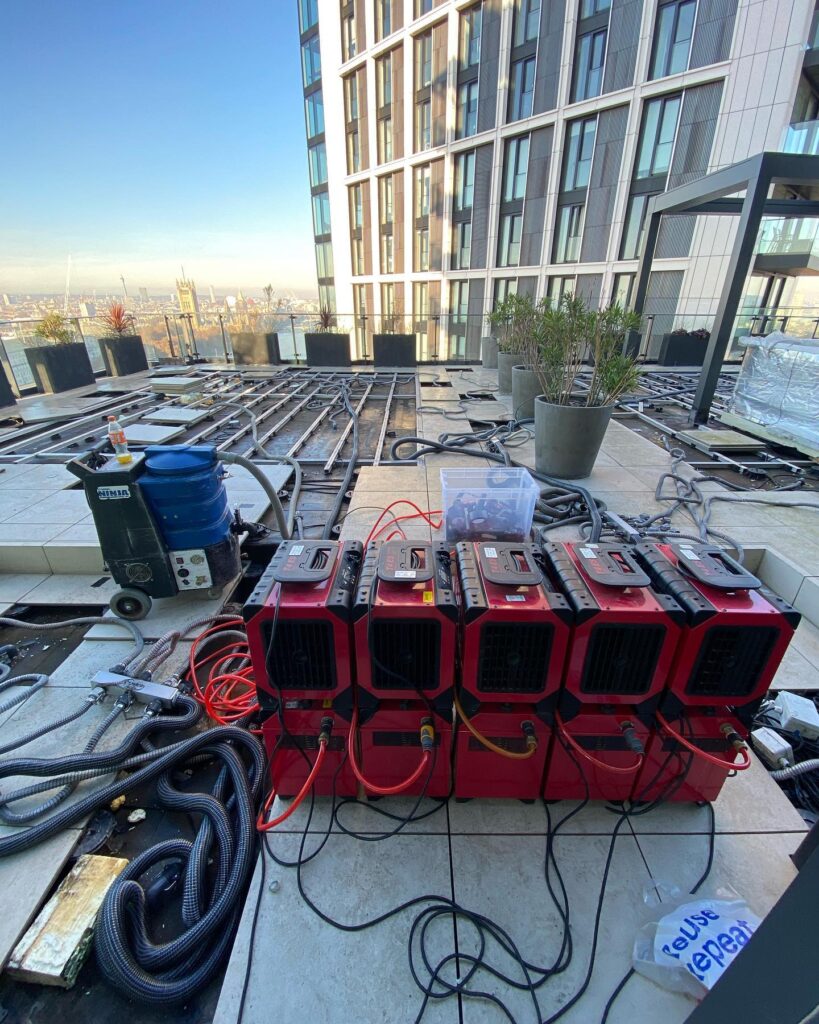
Professional extraction, decontamination, moisture mapping and structural drying after floods and escapes of water, with monitoring to establish when reinstatement can begin.
Walls, Ceilings & Joinery
Repair or replacement of plasterboard, plaster, cornices, coving, internal partitions, doors, skirting boards, architraves and other damaged joinery.
Kitchens & Bathrooms
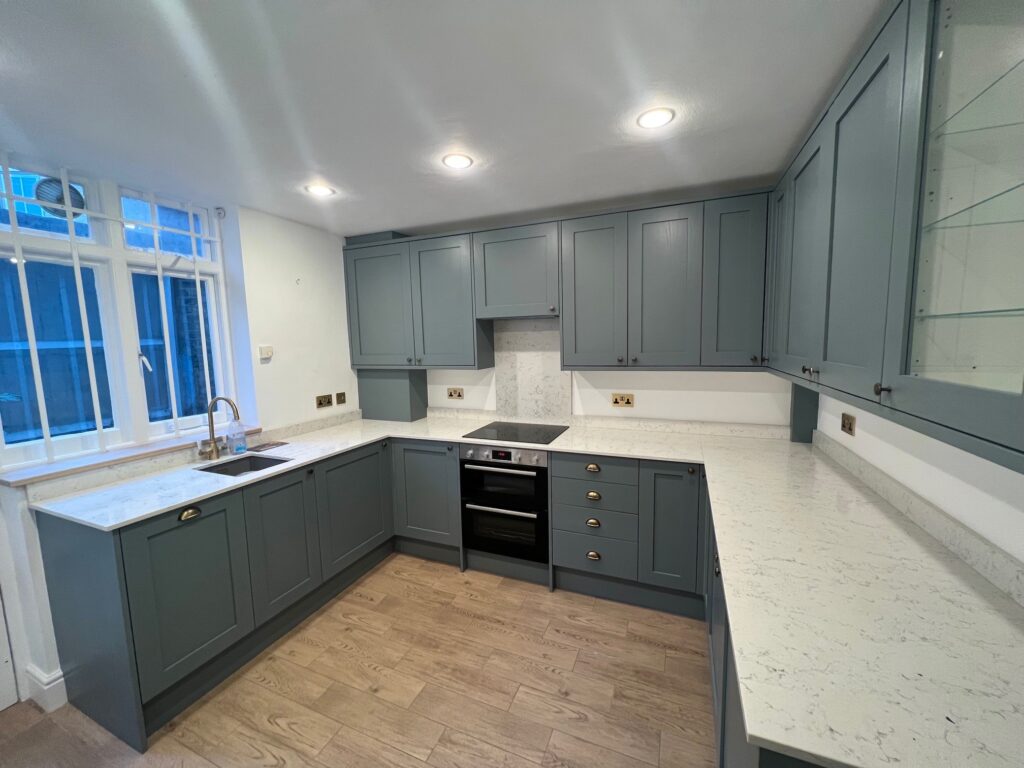
Removal and reinstatement of damaged cabinets, worktops, sanitaryware, wall finishes and associated plumbing, electrical and fitting work.
Plumbing, Electrical & Gas Works
Repair and reinstatement of affected building services, undertaken to the appropriate safety requirements and coordinated with the wider building programme.
Floors, Tiling & Decoration
Subfloor repairs, tiling, floor coverings, carpets, painting and decorating to complete the reinstatement and return the affected areas to use.
Will Buildings Insurance Cover the Reinstatement Cost?
Buildings insurance commonly covers damage caused by insured events such as flood, fire, storm and escape of water from a burst pipe or fixed water system. Where a claim is accepted, the policy may fund necessary work to repair or rebuild the insured parts of the property, subject to its wording, limits and excess.
Insurance is generally intended to restore the policyholder to the position they were in immediately before the damage. It does not automatically pay for improvements, unrelated renovations or every cost connected with finding and fixing the original cause.
Coverage is decided by your insurer, not by the repair contractor. Restorations (UK) can document the damage, provide a repair scope and quotation, and discuss the technical works with your insurer or loss adjuster where authorised.
Important: Insurance policies vary significantly. Read the policy schedule and wording, speak to the insurer before instructing non-emergency work, and obtain written confirmation of the approved repair scope and settlement basis.
Costs commonly covered by an accepted claim
- Repairs to the insured structure and permanent fixtures damaged by the insured event
- Reasonable strip-out, drying and reinstatement work required because of the covered damage
- Professional fees or building-control costs where the policy includes them and they are necessary
- Temporary accommodation where the home is uninhabitable, if included within the policy
- Trace and access costs for locating a leak where that cover is included
Costs that may not be covered
- The policy excess and costs above policy limits
- Wear and tear, poor maintenance, gradual deterioration or pre-existing damage
- Repairing the failed pipe, appliance or component that caused the escape of water, unless the policy says otherwise
- Upgrades or betterment beyond a like-for-like reinstatement, unless you fund the difference or it is agreed
- Undamaged contents under a buildings-only policy
- Unauthorised non-emergency work or costs the insurer considers unnecessary or unreasonable
How to Improve the Chances of a Smooth Insurance Repair Claim
Give the insurer evidence, not estimates alone
A quotation is stronger when it is supported by photographs, moisture readings, drying records, survey findings and a clear link between the insured incident and each proposed repair.
Separate the cause from the resulting damage
An insurer may cover the resulting water damage while excluding the worn pipe, failed seal or defective component that caused it. Ask the claims handler to confirm how each element will be treated.
Do not reinstate a wet building
Replacing plasterboard, flooring or fitted units before the underlying structure is dry can trap moisture and lead to further damage. Professional monitoring provides evidence that the building is ready for repair.
Agree the scope in writing
Confirm what work, materials, VAT and associated costs have been approved before the main reinstatement begins. If hidden damage is discovered, record it and seek a variation before carrying out additional work.
Keep invoices and electricity records
Keep invoices for emergency works, temporary repairs and accommodation. Where drying equipment is used, retain available energy-use records and ask the insurer whether these costs can be claimed.
Challenge problems through the correct route
If you disagree with a coverage decision or settlement, ask the insurer for its reasoning and use its formal complaints procedure. Eligible unresolved complaints may then be referred to the Financial Ombudsman Service.
Building Reinstatement After Flood, Leak or Fire
Flood Damage Reinstatement
Flood damage repair may require water extraction, contamination assessment, removal of damaged materials and extended structural drying before rebuilding can begin. Our flood restoration service connects the emergency response and drying stages with the eventual reinstatement.
Escape-of-Water Insurance Repairs
A burst pipe or hidden leak can damage ceilings, walls, insulation, floors, kitchens and electrical systems. We can provide leak detection, drying and full building repair once the source and extent of the damage have been established.
Fire and Smoke Damage Repairs
Fire reinstatement can include cleaning and decontamination, odour treatment, removal of damaged materials, structural and service repairs, new finishes and redecoration. See our fire restoration service for the earlier recovery stages.
Residential and Commercial Insurance Reinstatement
Homes and Residential Properties
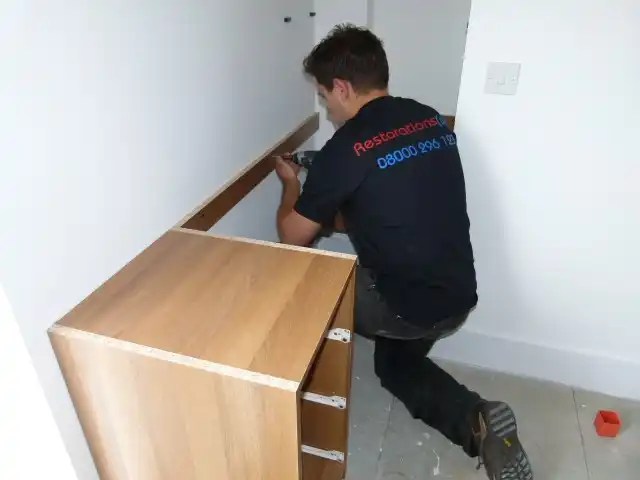
We reinstate houses, flats, rented homes and residential developments after insured damage. The work can range from one affected ceiling to the coordinated repair of several rooms or an extensively damaged property.
Commercial Buildings
For offices, shops, hospitality, care, industrial and other commercial properties, reinstatement is planned around safety, access and operational priorities. We can work with property managers, brokers, insurers and loss adjusters to coordinate the approved building works and reduce avoidable disruption.
Our Insurance Reinstatement Process
- Initial discussion: Tell us what happened, whether the cause has been resolved and what your insurer has requested.
- Site assessment: We assess the affected areas and review the available claim, survey and drying information.
- Scope and quotation: We prepare the proposed building repairs and associated costs for submission to the insurer or loss adjuster.
- Approval and programme: Once the scope is agreed and authority to proceed is confirmed, a building manager coordinates the work.
- Strip-out, drying and preparation: Any remaining mitigation, decontamination or drying is completed before finishes are replaced.
- Full reinstatement: The approved building repairs are delivered in the correct sequence by the required trades.
- Inspection and handover: The completed work is checked, the area is cleaned and relevant completion information is provided.
Read more about working with Restorations (UK) during an insurance claim.
Building Reinstatement and Insurance Repair FAQs
Sometimes. An insurer may appoint its own contractor, offer a cash settlement or ask you to obtain independent repair quotes. Check the policy and obtain the insurer’s written agreement before appointing a contractor for non-emergency reinstatement work.
Contact us with the property address, cause and date of damage, claim number, insurer or loss-adjuster details, photographs and any available reports. We can discuss the next assessment step and what the quotation needs to contain.
There is no universal number. Some insurers request more than one quotation, while others appoint a contractor or assess a single detailed scope. Ask your claims handler exactly what is required before arranging surveys.
Flood is commonly an insured risk under UK buildings insurance, but the cover depends on the policy, circumstances, exclusions, excess and limits. Notify the insurer promptly and allow it to assess the cause and damage before full reinstatement begins.
Many policies cover resulting damage from a sudden escape of water, such as a burst pipe. They may exclude the failed pipe or appliance itself, gradual leakage, wear and tear or poor maintenance. Trace and access cover also varies between policies.
An accepted claim normally funds repair or replacement on the agreed reinstatement basis rather than unrelated improvements. You may be able to choose an upgrade and pay the additional cost, but this must be agreed before ordering or installation.
Urgent work may be needed to protect people, make the property safe or prevent further damage. Wherever possible, contact the insurer first and document the work. Full reinstatement should normally wait until the scope and funding basis have been agreed in writing.
The repair programme depends on the amount of water, contamination, affected materials, drying time, insurer approval, specialist materials and extent of rebuilding. Significant reinstatement should begin only when the relevant structure is dry enough to receive new finishes.
Where you and the relevant parties authorise it, we can provide the technical scope, quotation, reports and updates required to discuss the proposed repair works with an insurer or loss adjuster. The insurer remains responsible for deciding policy coverage and authorising payment.
Ask for the decision and policy basis in writing. Provide any missing evidence and use the insurer’s formal complaints procedure if you still disagree. Depending on eligibility and the type of policyholder, an unresolved complaint may be referred to the Financial Ombudsman Service.