


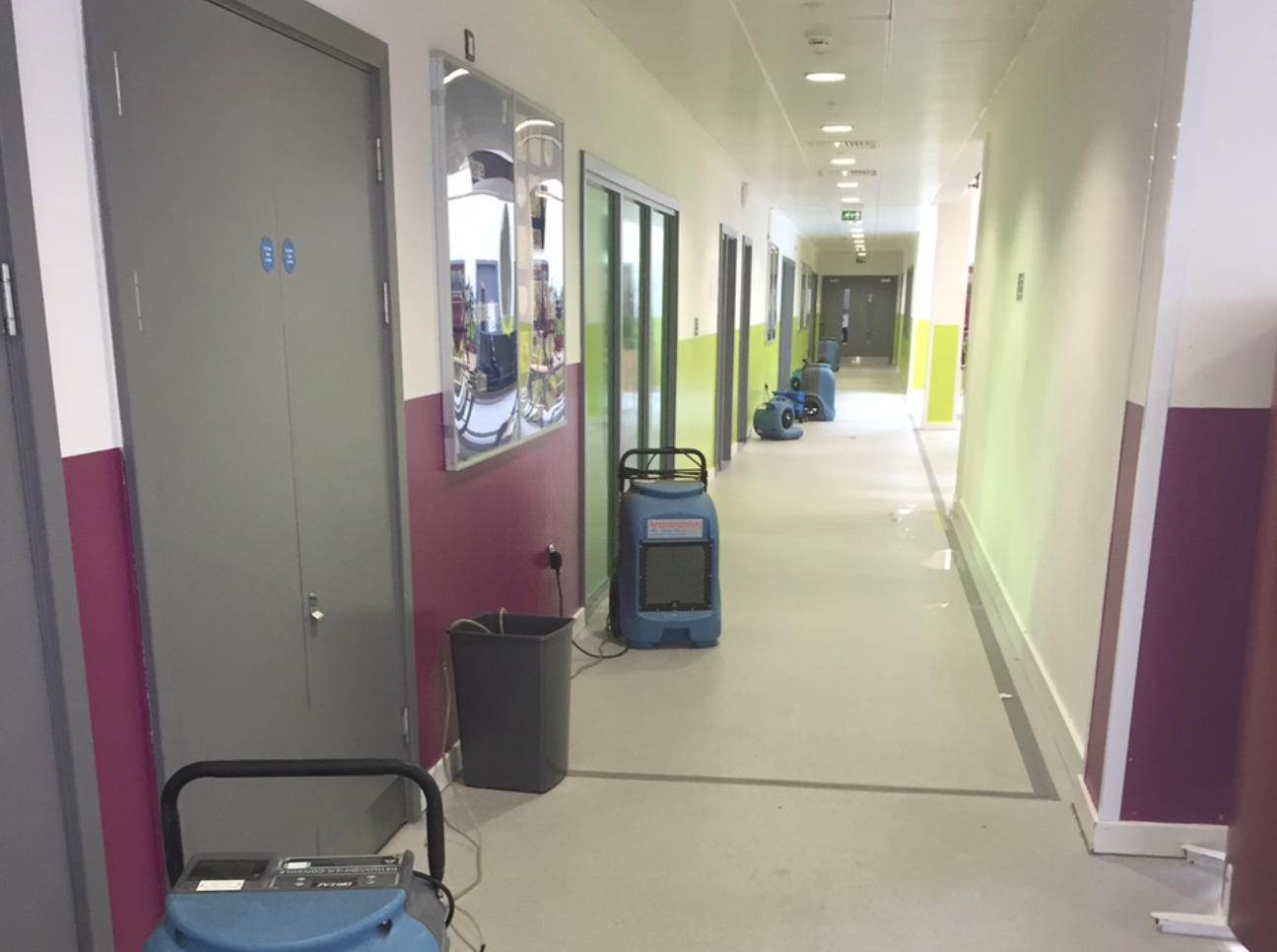
Restorations UK responded to major water damage at a school after the main water feed in the kitchen area became disconnected overnight, flooding approximately 4,800 sq ft of the building.
Our technicians were on site within two hours, extracting the water and installing specialist drying equipment. By using targeted cavity wall and structural drying rather than carrying out the extensive strip-out initially proposed, Restorations UK dried the affected walls and insulation within seven days and helped the school avoid an anticipated three-month closure.
Key Project Details
Client: School
Property Type: Commercial, Education
Incident: Main water feed became disconnected overnight
Affected Area: Approximately 4,800 sq ft
Response: Restorations UK on site within two hours
Services: Emergency water extraction, dehumidification and specialist cavity drying
Alternative Proposal: Removal of vinyl flooring, kitchen units and plasterboard walls
Drying Result: Cavity walls and insulation dried within seven days
Outcome: Anticipated three-month school closure avoided
4,800 Sq Ft of the School Affected by Water Damage
The school’s main water feed in the kitchen area became disconnected overnight, allowing water to spread through approximately 4,800 sq ft of the building before the problem was discovered.
For the school, the priority was not simply to remove the visible water. The building needed to be dried quickly enough to minimise disruption and allow pupils to continue their education wherever possible.
Restorations UK was instructed to respond to the incident and had technicians on site within two hours.
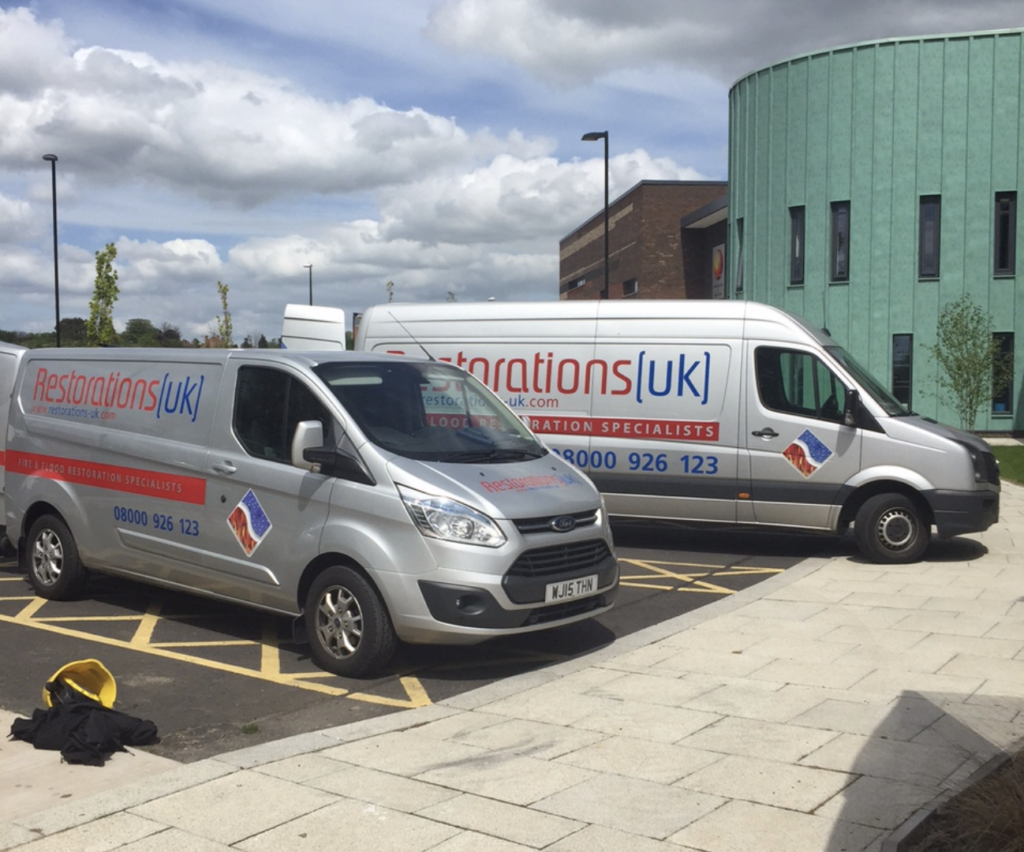
Restorations UK’s Two-Hour Emergency Response
On arrival, Restorations UK began emergency water extraction and installed drying equipment to begin controlling moisture within the affected areas.
Removing the water quickly was an important first stage, but the scale of the incident meant moisture had also entered walls, insulation, flooring and other parts of the building construction.
The challenge was therefore to dry these hidden areas without unnecessarily dismantling large sections of the school.
Extensive Strip-Out Had Been Recommended
Following an assessment, the loss adjuster recommended extensive strip-out to facilitate drying.
The proposed work included removing the vinyl flooring, kitchen units and plasterboard walls so that moisture trapped within the building could be reached.
This approach would have created substantial additional work and disruption throughout the school. The loss adjuster anticipated that the building could need to close for approximately three months.
Restorations UK Proposed Specialist Drying Instead
Restorations UK advised that the affected construction could be dried using a less disruptive specialist drying programme.
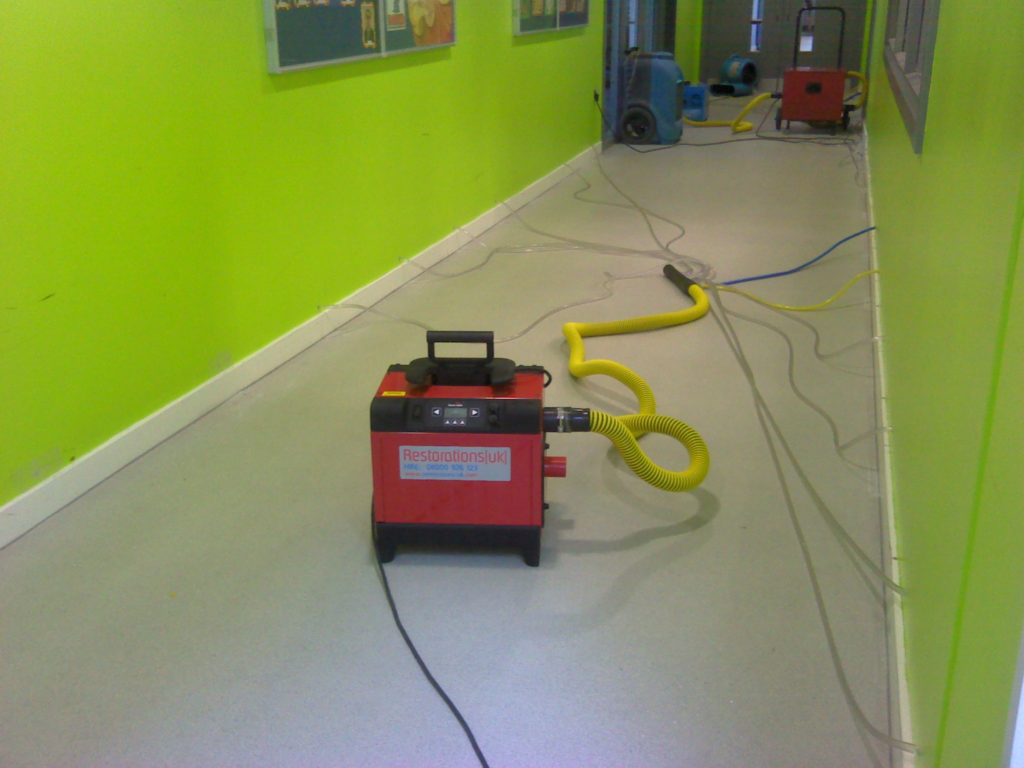
Rather than automatically removing the walls, flooring and completed kitchen, our technicians installed a cavity wall drying system designed to target moisture trapped inside the structure.
The kitchen remained installed and the vinyl flooring was retained. Any kitchen units that had suffered direct damage could then be replaced separately by the school’s kitchen contractors during the school holidays.
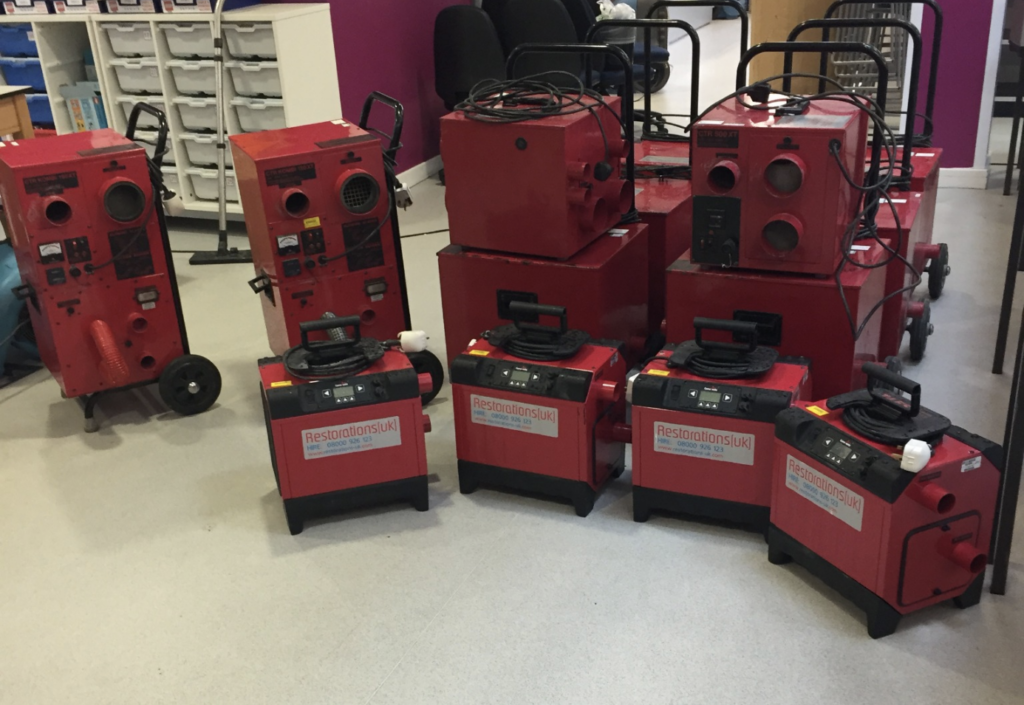
Drying Moisture Trapped Inside the Cavity Walls
Restorations UK installed a specialist cavity drying system that introduced hot, dry air into the affected wall cavities.
This allowed the drying process to target moisture within the walls and insulation directly rather than relying only on dehumidification of the surrounding rooms.
The approach is particularly useful where water has entered cavities or insulation that may remain wet even when the visible surfaces of the building begin to appear dry.
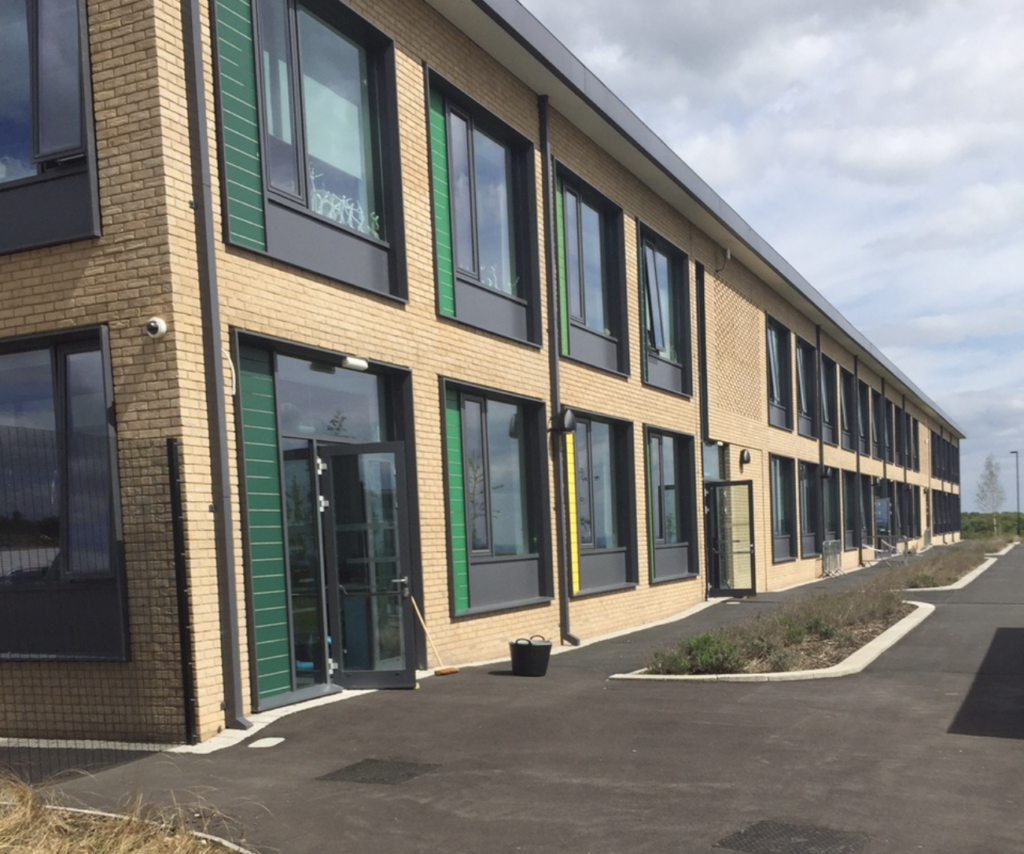
Why Drying the Cavities Mattered
Moisture trapped inside insulated walls can remain hidden behind apparently dry surfaces. If the internal construction is not properly dried, residual moisture can contribute to damp, odours, mould growth and longer-term deterioration.
By targeting the affected cavities directly, Restorations UK could dry the building construction while retaining far more of the existing finishes.
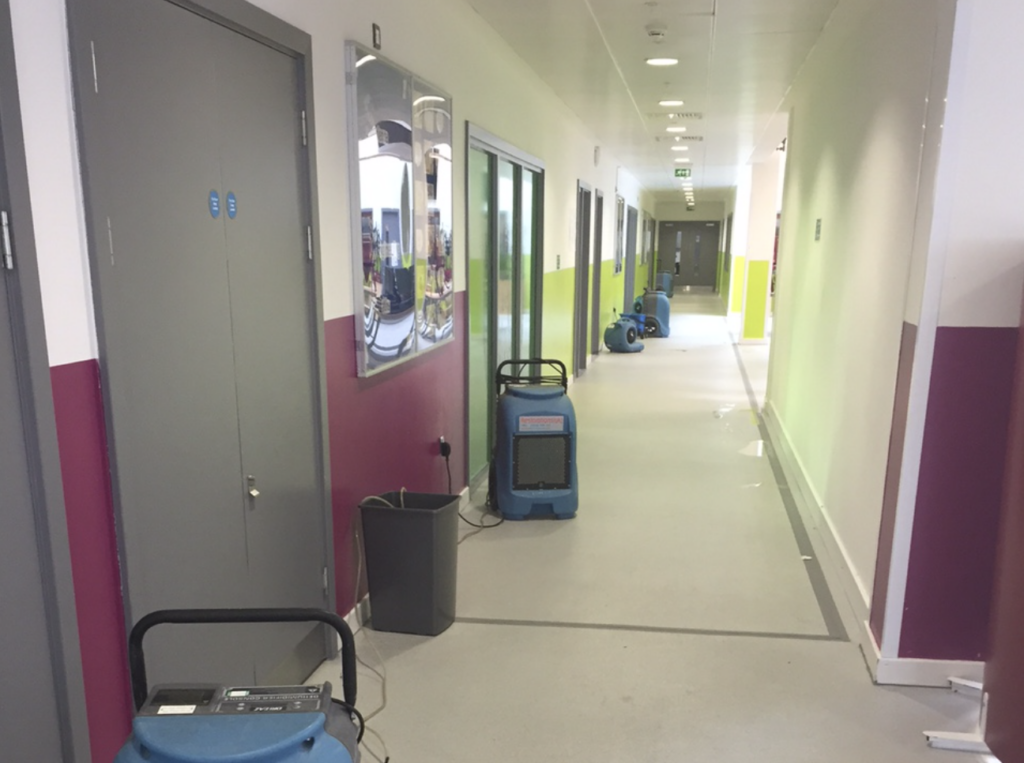
Thermal Imaging and Moisture Monitoring
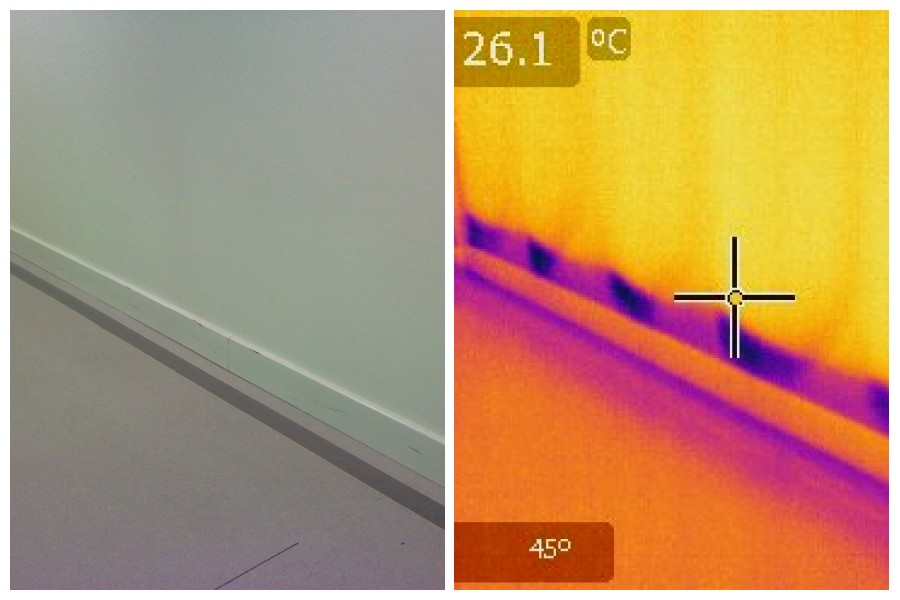
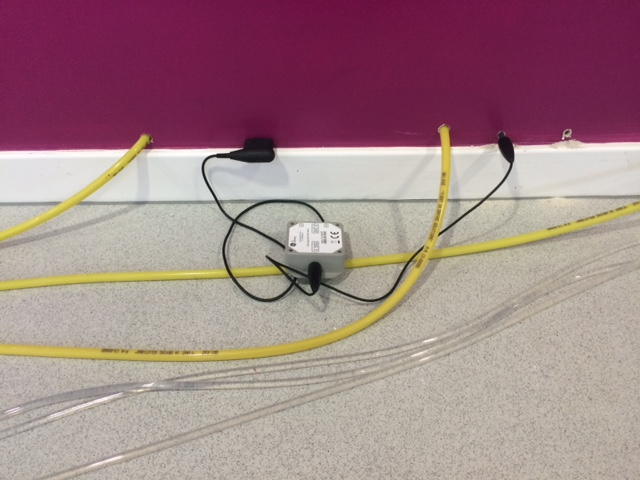
The drying programme was monitored to establish how moisture levels within the building were changing.
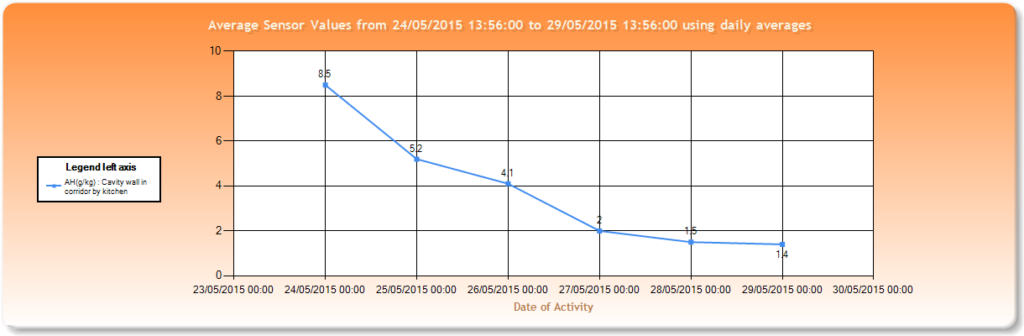
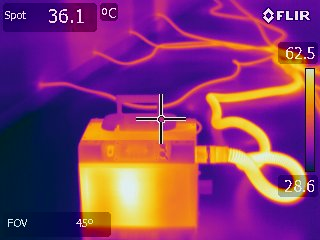
Thermal imaging helped identify areas of wet insulation and plasterboard, while monitoring equipment provided data on the progress of the cavity drying programme.
Cavity Walls and Insulation Dried Within Seven Days
Restorations UK dried the affected cavity walls and insulation within seven days.
The floors were also dried until their moisture content matched areas of the building that had not been affected by the flood.
Achieving comparable moisture levels provided a practical benchmark that the affected flooring had returned to the condition of the surrounding dry areas.
The Result: A Three-Month School Closure Was Avoided
The specialist drying approach meant the extensive strip-out initially proposed was not required.
By retaining the vinyl flooring, kitchen and much of the existing wall construction, Restorations UK helped the school avoid the three-month closure anticipated by the loss adjuster.
The approach also avoided the substantial costs associated with removing and rebuilding large areas of the property, saving the insurer many hundreds of thousands of pounds according to the original project record.
What This School Water Damage Project Demonstrates
This project demonstrates why water damage does not automatically require extensive strip-out. The appropriate response depends on where the moisture has travelled, how the building is constructed and whether affected materials can be dried effectively in place.
Restorations UK combined rapid water extraction, commercial dehumidification, cavity drying, thermal assessment and moisture monitoring to target both visible and hidden moisture within the school.
The result was a substantially less disruptive restoration programme that protected the existing building finishes, reduced costs and allowed the school to avoid a prolonged closure.
School and Commercial Water Damage Restoration by Restorations UK
Restorations UK provides emergency flood restoration and specialist structural drying for schools and other commercial properties affected by leaks, flooding and escapes of water.
Our approach combines rapid extraction with professional drying systems designed to target moisture within floors, walls, cavities and insulation while minimising unnecessary strip-out and disruption.
